Skip links

Concrete Protection

🛒 BROWSE PRODUCTS

Concrete Protection

Concrete is a strong and durable material, but untreated concrete is extremely porous. It can dust easily, absorb liquids quickly and stain very easily if it is not properly finished and protected. Unpolished concrete will also wear more quickly because the surface is rough, open and more exposed to traffic, abrasion and dirt.

Grinding and polishing concrete helps close the surface, makes the concrete denser, reduces absorbency and improves stain resistance. It also creates a smoother surface that is easier to clean, easier to maintain and more resistant to wear.

At AK Surface Solutions, we classify polished concrete from a 200 grit finish upwards. For extra hardening, stain resistance and easier maintenance, we recommend using a lithium concrete hardener and lithium concrete guard as part of the polishing and protection process.

Recommended Concrete Mix for Polished Concrete

For polished concrete, we recommend a consistent C35 pump mix from a batching plant, delivered by a standard concrete mixer truck. The mix should be no WRA, no water additives, straight OPC or CEM1.

If you want a power floated cream finish, the colour should be planned before installation. We recommend using Hatcrete colour additives or a suitable coloured dry shake hardener during the power floating process. This helps create a more controlled surface colour and a better decorative finish.

If you want an exposed aggregate polished concrete finish, Hatcrete colour additives should be added directly to the concrete mix at the batching plant. We also recommend using a minimum 10 mm aggregate for exposed polished concrete finishes.

Without colour added to the mix, polished concrete will follow the colour of the sand, as sand is the main ingredient in the concrete mix.

Drying Time Before Polishing

Concrete should normally be left to cure and dry for at least 28 days before polishing. This gives the slab time to gain strength and allows moisture levels to reduce before grinding, polishing, densifying and applying final protection.

If the concrete is going to be polished, it should be left uncovered during the drying period. Do not cover it with sheets, boards, plastic, protection mats or stored materials, as this can trap moisture and cause marks or colour differences in the slab.

Do not store anything heavy on the concrete while it is drying. Heavy items, pallets, boards, machinery or materials can leave pressure marks, moisture shadows or colour changes that may show in the polished finish later. Once the concrete is polished, these marks can be very difficult or impossible to remove completely.

Concrete Protection Products We Recommend

For hardening, densifying and dustproofing concrete

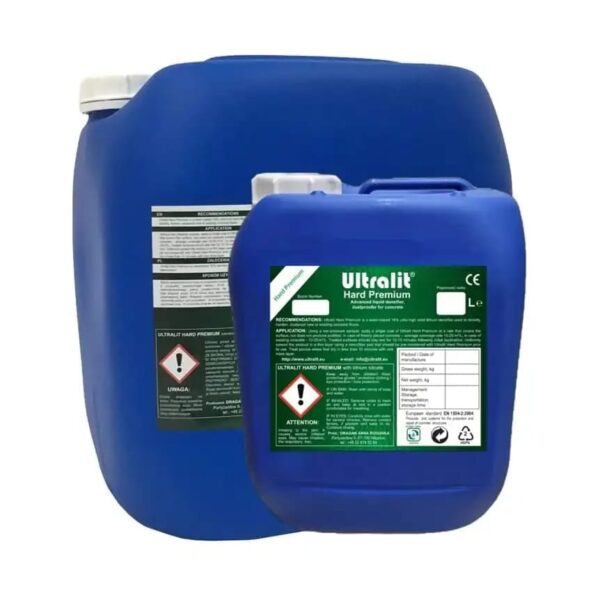
ULTRALIT HARD PREMIUM is our premium lithium concrete densifier and dustproofer. It is used to harden, densify and strengthen new or existing concrete floors. With up to 18% lithium solids content, it is ideal for floors that need maximum surface hardening, dust reduction and abrasion resistance.

ULTRALIT HARD PREMIUM penetrates into the concrete and reacts internally, creating a harder and denser surface. Because the protection is formed inside the concrete, it will not peel, flake or debond like traditional surface coatings.

For final gloss, stain resistance and easier maintenance

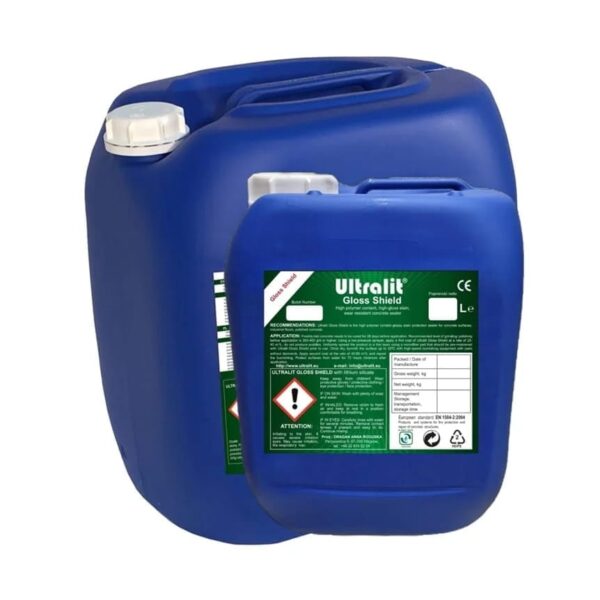
ULTRALIT GLOSS SHIELD is a lithium nano technology concrete guard and high gloss sealer for honed and polished concrete. It is used as a final protection treatment to improve sheen, stain resistance, colour depth and ease of maintenance.

Gloss Shield has a dual action. Lithium silicates help harden the concrete surface, while nano particle polymer components form a dense, breathable protective micro layer. This improves gloss and protection without creating a heavy coating that can peel or debond.

Polishing Process and Product Guidance

The correct polishing process depends on the concrete hardness, the required exposure and the final finish. Concrete hardness, aggregate exposure, previous finishing, porosity and site conditions will all affect the diamond selection and polishing sequence.

Full exposure polished concrete process

For a full exposure polished concrete finish, the process normally starts with metal bond diamonds in the correct bond for the slab. Use a softer bond diamond for hard concrete and a harder bond diamond for soft concrete. For medium concrete, a medium bond metal diamond such as LAVINA Metal Bond Grey is a good starting point.

  1. Start with metal bond diamonds in the correct bond for the concrete hardness.
  2. Use metal grits such as 30, 70 and 120 depending on the exposure required and the condition of the slab.
  3. After metals, transition to either 100 grit copper diamonds wet or use 50 and 100 grit HD resin pads, depending on the concrete.
  4. After the floor has been opened and refined to around 100 grit, apply ULTRALIT HARD PREMIUM 18% Lithium Densifier to harden and dustproof the concrete.
  5. Continue polishing through the resin stages to around 200 grit.
  6. For final polishing, continue with NATO polishing pads at 400 and 800 grit, depending on the required finish.
  7. Finish with ULTRALIT GLOSS SHIELD Lithium Guard for extra gloss, stain resistance and easier maintenance. Apply in thin, even coats and burnish after each coat has dried using a high speed burnisher and a suitable polishing pad without diamonds.
Power floated cream finish process

A cream finish is a light surface polish where the top power floated surface is kept and polished without heavy grinding into the aggregate. For this finish, colour is normally controlled at the surface using Hatcrete colour additives or a suitable coloured dry shake hardener during power floating.

  1. Start from around 100 grit copper diamonds wet.
  2. Move to 200 grit HD resin.
  3. After the 200 grit stage, apply ULTRALIT HARD PREMIUM lithium densifier to harden and dustproof the concrete.
  4. Once the floor has been hardened and dried, continue with 400 and 800 grit NATO polishing pads.
  5. Finish with ULTRALIT GLOSS SHIELD lithium guard for extra gloss, stain resistance and easier maintenance. Apply in thin, even coats and burnish after each coat has dried using a high speed burnisher and a suitable polishing pad without diamonds.

Densifier Guidance

If you are planning to harden the concrete, we recommend grinding and polishing the surface to around 100 to 200 grit first. This opens and refines the concrete enough for the lithium densifier to penetrate properly.

ULTRALIT HARD PREMIUM is supplied as a premium 18% lithium densifier. It can be used neat on porous, absorbent or weaker concrete where maximum hardening is required.

For a standard strength lithium densifier, mix 2 parts ULTRALIT HARD PREMIUM with 1 part distilled water. This creates an approximately 12% lithium densifier.

For very hard, dense or power floated concrete, mix 1 part ULTRALIT HARD PREMIUM with 1 part distilled water. This creates an approximately 9% lithium densifier, making the product easier to apply on tight concrete surfaces where penetration is slower.

Very Dry Concrete Before Densifying

If the concrete is extremely dry and very absorbent, lightly saturate the surface with clean water before applying the densifier. This helps slow down absorption and gives the lithium densifier more working time to penetrate and react properly.

The surface should be damp, not flooded. Do not apply densifier onto standing water.

Applying Final Lithium Guard

After densifying and polishing, a final lithium guard can be applied where the floor needs extra gloss, stain resistance and easier maintenance.

ULTRALIT GLOSS SHIELD must be sprayed onto the surface and spread evenly with a flat microfibre mop. Apply just enough product to wet the surface in a thin, even layer. Do not overapply and do not leave puddles, as overapplication will make the product very difficult to burnish and can leave an uneven finish.

Once each coat has dried, it must be burnished with a high speed burnisher and a suitable polishing pad without diamonds.

Concrete Protection FAQ

What concrete mix do you recommend for polished concrete?

For polished concrete, we recommend a consistent C35 pump mix from a batching plant, delivered by a standard concrete mixer truck. The mix should be no WRA, no water additives, straight OPC or CEM1.

How do I achieve the desired colour on a cream finish polished concrete floor?

For a power floated cream finish, the colour must be planned before installation. We recommend using Hatcrete colour additives or a suitable coloured dry shake hardener during the power floating process. This colours the surface layer and helps create a more controlled decorative finish.

A cream finish is a light surface polish, so the top power floated surface is kept and polished without heavy grinding into the aggregate. This means the colour needs to be achieved at the surface during installation, not afterwards during polishing.

How do I achieve the desired colour on exposed aggregate polished concrete?

For an exposed aggregate polished concrete finish, the colour should be added directly to the concrete mix at the batching plant before delivery. This is because the floor will be ground deeper to expose the aggregate, so the colour needs to be throughout the concrete mix, not only on the surface.

We also recommend using a minimum 10 mm aggregate for exposed polished concrete finishes. Without colour added to the mix, polished concrete will mainly follow the colour of the sand, as sand is the main ingredient in the concrete mix.

What is the difference between a cream finish and exposed aggregate polished concrete?

A cream finish is a light surface polish where the top power floated surface is kept and polished without heavy grinding into the aggregate.

An exposed aggregate finish is achieved by grinding deeper into the concrete to reveal the aggregate, we recommend using a minimum 10 mm aggregate for a better exposed polished concrete finish.

How long should concrete dry before polishing?

Concrete should normally be left to cure and dry for at least 28 days before polishing. If the concrete is going to be polished, it should be left uncovered during the drying period. Do not cover it with sheets, boards, plastic, protection mats or stored materials, as this can trap moisture and cause marks or colour differences in the slab.

Do not store anything heavy on the concrete while it is drying. Heavy items, pallets, boards, machinery or materials can leave pressure marks, moisture shadows or colour changes that may show in the polished finish later.

Will my concrete be grey once polished?

Not always. Standard concrete mix will not automatically turn grey once it is polished. The final colour will mainly follow the colour of the sand, as sand is the main ingredient in the concrete mix. This means polished concrete can sometimes have a warmer, creamier, beige or sandy tone rather than a clean grey finish. For a consistent grey finish, colour additives must be added directly to the concrete mix at the batching plant before delivery

Is concrete from a volumetric mixer suitable for polished concrete?

Unfortunately, concrete poured from volumetric mixer trucks is usually not suitable for a high quality polished concrete finish. Polished concrete needs a very consistent mix, controlled water content, even cement content and uniform distribution of sand and aggregate throughout the whole slab.

Volumetric mixer trucks are often not calibrated accurately enough for this type of finish. This can result in an inconsistent concrete mix, with some areas being extremely soft and other areas being much harder. When the floor is ground and polished, these inconsistencies can show as uneven aggregate exposure, patchy colour, soft spots, different polishing results and areas that wear differently over time.

When should I apply lithium densifier during polishing?

If you are planning to harden the concrete, we recommend grinding and polishing the surface to around 100 to 200 grit first. This opens and refines the concrete enough for the lithium densifier to penetrate properly.

What should I do if the concrete is extremely dry before densifying?

If the concrete is extremely dry and very absorbent, lightly saturate the surface with clean water before applying the densifier. The surface should be damp, not flooded, and densifier should not be applied onto standing water.

What machine should I use for polished concrete?

For larger polished concrete projects, we recommend using a planetary grinder such as the LAVINA L20. The machine should be matched with the correct diamonds and polishing pads for the concrete hardness, aggregate exposure and final finish required.

What pads should I use for polishing concrete edges?

For edges, corners and areas close to walls, use RAZOR CERAMIC PAD 125 mm or suitable edge polishing pads. These help continue the polishing process where the main planetary grinder cannot reach, giving a more consistent finish around the perimeter of the floor.