
Professional Tool
Product Overview
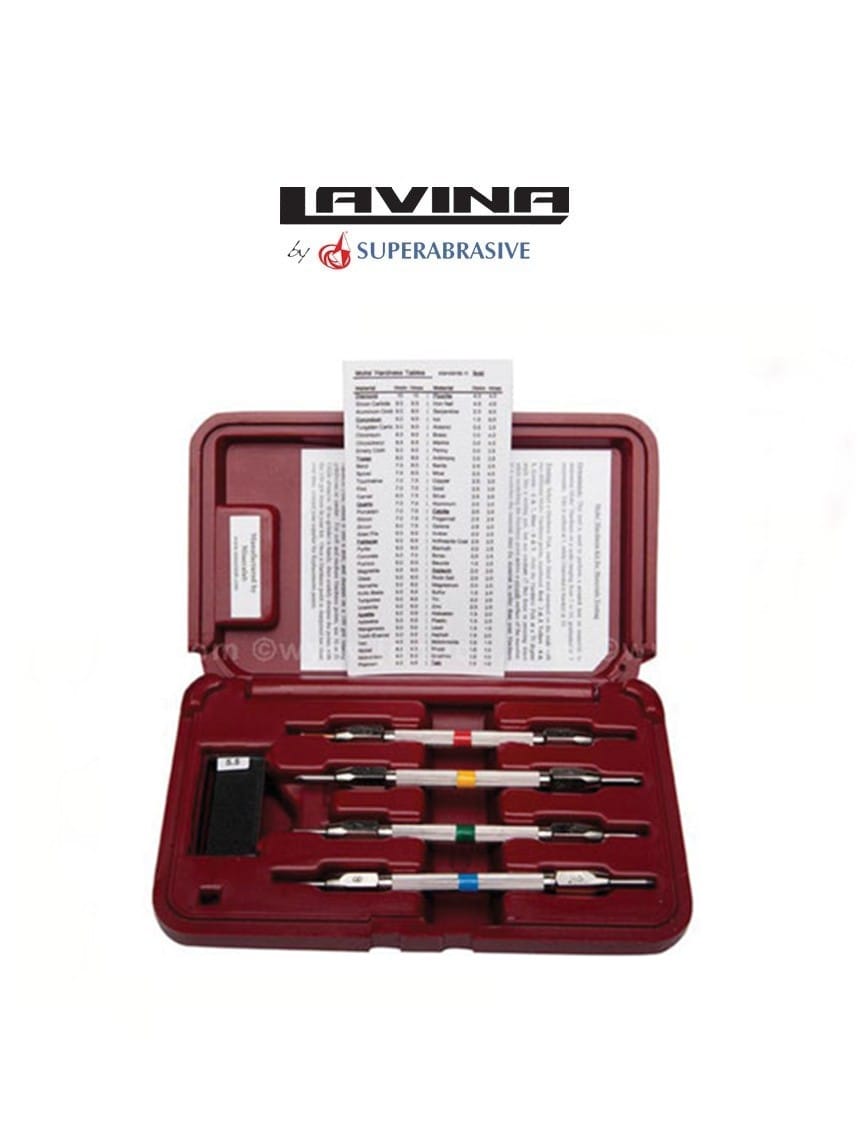
The MOHS’ Hardness Test Kit provides a straightforward method of assessing a material’s resistance to scratching. It can be used by flooring professionals to evaluate concrete or stone floor hardness before choosing a diamond tooling bond, as well as for comparative hardness testing of minerals and other suitable surfaces.
The Mohs scale ranks relative hardness from 1, represented by soft materials such as talc, to 10, represented by diamond. A harder material will scratch a softer material below it on the scale.
Key Benefits
- Assesses relative surface hardness using the established Mohs scratch-test method.
- Helps inform diamond tooling bond selection for concrete floor preparation and polishing.
- Provides a simple sequential testing process.
- Suitable for use on concrete surfaces and minerals.
- Helps distinguish a genuine scratch from loose powder or surface residue.
How to Use
- Select a clean, flat and preferably inconspicuous test area.
- Hold the test tool like a pencil at approximately a 70-degree angle.
- Draw the point across the surface using moderate, writing-level pressure.
- Brush away any resulting powder or residue.
- Check the test line carefully, including with a fingernail, to confirm that a genuine groove has been created rather than a removable surface mark.
- Continue testing sequentially through the hardness values until the point at which scratching begins or stops is identified.
Applications
- Assessing the relative hardness of concrete floors.
- Supporting diamond tooling bond selection for floor preparation or polishing work.
- Comparative scratch testing of minerals.
Important Notes
- Always test in a discreet area where possible, as the process is intended to create a visible scratch or groove.
- Use consistent pressure between tests to support a meaningful comparison.
- Remove powder before assessing the result; transferred residue can be mistaken for a genuine scratch.
- The supplied information does not specify the individual test tools, hardness values or other components included in the kit.
Frequently Asked Questions
What does the Mohs hardness test measure?
It measures a material’s relative resistance to scratching. A harder test point can scratch materials positioned below it on the Mohs scale.
Can this kit be used on concrete floors?
Yes. It can be used to assess the relative hardness of a concrete surface and help inform the choice of diamond tooling bond.
How do I know whether the surface has been scratched?
Brush away loose powder and inspect the test line. A genuine groove should remain and can be checked carefully with a fingernail. Loose residue alone does not confirm that the surface was scratched.
Should I test in a visible area?
No. Choose a clean, flat and inconspicuous location where possible because a successful test creates a physical groove in the surface.
Shipping & Delivery
Delivery across the UK: Available delivery methods, estimated times and charges are calculated for your order and shown at checkout before payment.
Larger, heavier or specialist machinery may require a tailored delivery arrangement. Please contact us if you need help before placing your order.
Returns & Refunds
Need to return an item? Please contact us before sending anything back so we can confirm eligibility and provide the correct return instructions.
Items should be unused and returned in their original condition and packaging. Some specialist, made-to-order or used items may have different return conditions.
MOHS' Hardness Scratch Test Kit
£242.40
(£202.00 excl. VAT)
Scratch test kit for assessing the relative hardness of concrete & stone floors, minerals and other test surfaces using the Mohs scale. The result helps flooring professionals evaluate concrete or stone hardness when selecting an appropriate diamond tooling bond. Sequential testing makes it easier to identify the point at which a surface can or cannot be scratched.
Related Products
 Select options
Flexible Floor Polishing Pads
Price range: £17.40 through £40.20
( Price range: £14.50 through £33.50 excl. VAT)- Select options
SupraShine Hybrid Pads (5in / 125 mm)
£158.40
(£132.00 excl. VAT) - Select options
Flexible Electroplated Diamond Pads
Price range: £15.84 through £33.60
( Price range: £13.20 through £28.00 excl. VAT) - Select options
M14 | Diamond Cup Wheel | Stone & Concrete
£94.80
(£79.00 excl. VAT)


Reviews
There are no reviews yet.