Concrete can be ground either dry or with water, and both methods are used professionally. The better option depends on the stage of the job, the tooling, the site conditions and what needs to happen after grinding. Dry grinding is often preferred for modern floor preparation because it avoids slurry and makes the surface easy to inspect, while wet grinding can reduce airborne dust, keep tooling cooler and help in situations where water-assisted processing suits the system.
The important point is that wet versus dry is not a simple question of which method is universally better. A contractor should choose the process that gives the best balance of cutting performance, dust or slurry control, tool life, visibility and site practicality. AK Surface Solutions also notes in its How to Choose Lavina Diamond Tools for Concrete Grinding & Polishing guide that tooling selection should consider whether the floor will be processed wet or dry, alongside concrete hardness, machine choice and the required finish.
What Is Dry Concrete Grinding?
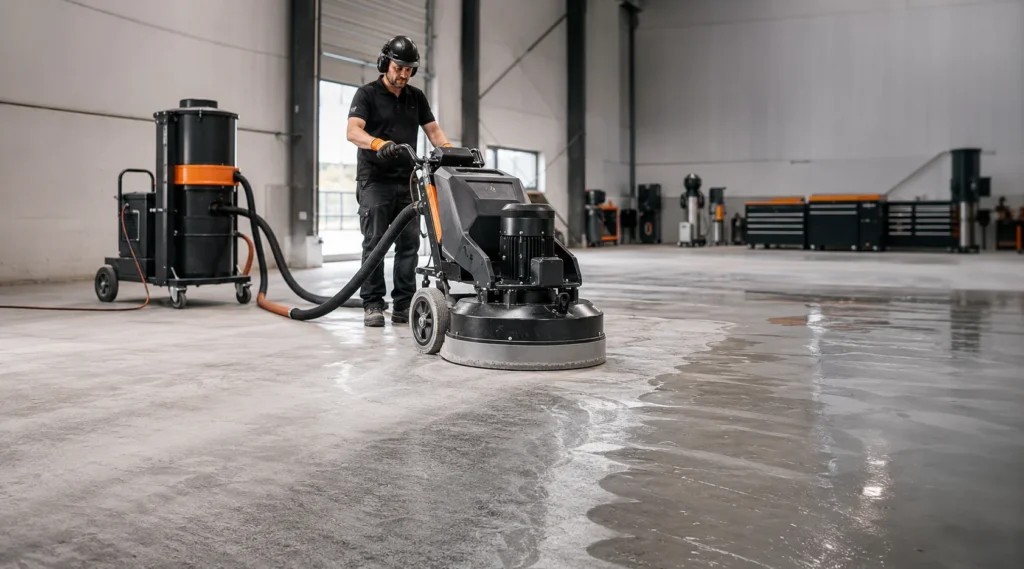
Dry concrete grinding uses diamond tooling without adding water to the cutting area. Dust is controlled through the grinder shroud and a suitable dust-extraction system, allowing fine concrete particles to be removed as the machine works. On a properly set-up site, this creates a relatively clean workflow because there is no slurry to collect and the floor can be inspected immediately after each pass.
Dry processing is common for surface preparation, coating removal, aggregate exposure and many polishing systems. It also suits projects where the floor needs to stay dry for the next stage, such as applying a coating, repair product, densifier or protective treatment. The trade-off is that the tooling can run hotter, dust extraction needs to be effective and some diamonds may wear differently compared with wet use.
What Is Wet Concrete Grinding?
Wet concrete grinding introduces water at the contact point between the diamond tool and the slab. The water helps cool the tooling, suppresses airborne dust and carries removed concrete particles into a slurry. On hard or heat-generating floors, that cooling and lubrication can help keep certain tools working consistently for longer.
The disadvantage is that the dust has not disappeared; it has been converted into wet slurry. That slurry needs to be collected before it dries, and the floor often needs further cleaning before the next stage can begin. On indoor projects, occupied buildings or sites where water cannot be allowed to spread into joints, walls or adjacent areas, slurry management can become more difficult than dust extraction.
Dust Control Is One of the Biggest Differences
Concrete grinding can release very fine mineral dust, including respirable crystalline silica, so dust control should be planned before the machine starts. Dry grinding relies on effective extraction at the source. The grinder, shroud, hoses and dust collector all need to work as a system, because poor suction can leave dust escaping around the machine and reduce visibility across the floor.
Wet grinding suppresses much of the airborne dust by trapping particles in water. This can be useful where dry extraction is difficult or where the selected process is designed to run wet. It should not be treated as a no-clean-up method, however, because the resulting slurry still contains fine concrete solids and needs controlled collection and disposal.
Wet Grinding Can Help Keep Diamond Tools Cooler
Heat affects the way diamond tooling behaves, especially during aggressive grinding or long continuous passes. Water removes heat from the contact area and can reduce the risk of some pads or resins overheating. It can also help prevent certain tools from loading with dry dust, which is one reason wet processing remains useful in professional floor restoration.
This does not mean every diamond tool should automatically be used wet. Some tooling is designed specifically for dry use, while other products are suitable for either method. AK Surface Solutions’ Heavy Duty Resin Pads, for example, are designed for professional concrete polishing and can be used in both wet and dry applications. Always follow the guidance for the individual tooling rather than assuming water will improve every stage.
Dry Grinding Makes the Surface Easier to Inspect
One practical advantage of dry grinding is visibility. Once the dust has been extracted, the contractor can see the scratch pattern, aggregate exposure, repairs and remaining defects without waiting for the floor to dry. This makes it easier to decide whether the current grit has completed its job before moving to the next stage.
Wet floors can temporarily appear darker and more uniform, which can hide fine scratches or small differences in the finish. After slurry removal, the slab may also need time to dry before the true surface condition is obvious. For multi-stage polishing, immediate inspection can be a major reason to use dry processing during later refinement stages.
Slurry Management Is the Main Challenge with Wet Grinding
Wet grinding produces a mixture of water and very fine concrete particles that can become difficult to remove once it begins to dry. The slurry needs to be vacuumed or collected continuously, not pushed into drains or left around the perimeter of the floor. If it dries on the slab, it can form a hard residue that creates extra cleaning work before the next grinding or polishing stage.
Slurry can also move into saw cuts, cracks, joints and surrounding construction if the work area is not controlled carefully. On a large industrial floor, this may be manageable with suitable wet vacuums and a planned collection process. In smaller indoor spaces, the additional labour can make dry grinding with efficient dust extraction considerably more practical.
Dry Grinding Is Often More Practical Before Coatings or Protection
If the concrete is being prepared for a coating or another moisture-sensitive system, keeping the slab dry can simplify the handover between stages. After dry grinding and thorough vacuuming, the surface can often be assessed and prepared for the next product without introducing additional water that then needs to evaporate.
The same principle matters in polished-concrete systems. AK Surface Solutions’ Concrete Protection Guide recommends inspecting, grinding, refining and cleaning the floor before densification and protection. A clean, receptive surface is essential, so any wet process needs to include enough time for slurry removal and drying before the selected treatment is applied.
Wet and Dry Grinding Can Produce Different Tool Behaviour
The same slab can feel different under the grinder when water is introduced. Water changes friction, heat and the way removed material moves around the tooling, so cutting speed and segment wear may change. A diamond that glazes quickly when dry may behave differently when run wet, while a pad that cuts cleanly dry may become less predictable if it was not designed for wet use.
This is why test areas matter. If a contractor is considering changing from dry to wet processing, or from wet to dry, the new method should be tested on a small representative area before committing to the full floor. The LAVINA Diamond Tools range includes metal bonds, transitions and resin tooling for different concrete conditions and stages, but the selected product still needs to be matched to the actual slab and working method.
Can You Use Both Wet and Dry Methods on the Same Floor?
Yes. A hybrid approach can work very well where the early grinding stages benefit from water but later polishing stages are easier to control dry. For example, a contractor may use water during aggressive cutting or selected transition stages, then move to dry polishing when immediate visibility and cleaner site management become more important.
The transition should be deliberate rather than random. Before changing from wet to dry, remove the slurry completely and allow the surface to dry enough for accurate inspection. Before changing from dry to wet, confirm that the tooling and machine set-up are suitable for water use and that the site has a safe plan for slurry collection.
When Is Dry Concrete Grinding Usually the Better Choice?
Dry grinding is often the better choice when the project is indoors, the surface needs to remain dry for the next treatment, or fast inspection between passes is important. It is also practical on jobs where water containment would be difficult, where slurry disposal is inconvenient or where the grinding system has been designed around high-efficiency dust extraction.
For coating preparation and many commercial floor projects, the ability to grind, vacuum and continue without a drying period can save significant time. Dry processing also makes it easier to monitor scratch removal and aggregate exposure as the work progresses.
When Is Wet Concrete Grinding Usually the Better Choice?
Wet grinding can be useful when dust suppression is the priority, when heat is affecting tool performance or when the selected diamond system is specifically designed to run with water. It can also help during aggressive cutting stages where the cooling effect supports consistent tooling performance.
The method becomes less attractive when the site cannot manage slurry effectively. Water needs somewhere to go, the wet waste needs to be removed, and the floor may need additional drying time before later treatments. A wet method should therefore be selected because it benefits the process, not simply because it appears to eliminate dust.
Common Wet vs Dry Grinding Mistakes
One mistake is choosing the method without checking whether the tooling is compatible with it. Another is using dry grinding without enough extraction capacity, which can leave the work area dusty and make surface inspection more difficult. On wet jobs, allowing slurry to dry on the floor can create an avoidable clean-up problem and interfere with the next stage.
Contractors should also avoid assuming that water will fix a poorly matched diamond tool. Concrete hardness, bond selection, grit, segment design and machine weight still matter. Wet or dry processing changes the working conditions, but it does not replace correct tooling selection.
Frequently Asked Questions
Is it better to grind concrete wet or dry?
Neither method is always better. Dry grinding is often more practical for indoor surface preparation because it avoids slurry and allows immediate inspection, while wet grinding can reduce airborne dust and help keep tooling cooler. The correct choice depends on the site, the tooling, the grinding stage and what needs to happen next.
Can you grind concrete wet?
Yes. Professional concrete grinders and compatible diamond tools can be used with water where the equipment and site set-up allow it. Wet grinding suppresses airborne dust and cools the tooling, but it creates concrete slurry that must be collected and the floor may need to dry before later treatments.
Do you need a vacuum for dry concrete grinding?
Yes. Dry concrete grinding should be paired with an effective dust-extraction system connected to the grinder. The extractor helps control fine dust at the source, improves visibility and reduces the amount of clean-up required after each grinding pass.
Does wet grinding reduce concrete dust?
Wet grinding greatly reduces airborne concrete dust because the water captures fine particles and turns them into slurry. The material still needs to be managed safely, so wet grinding replaces a dust-control problem with a slurry-control process rather than removing the waste completely.
Can concrete polishing be done wet or dry?
Yes, depending on the polishing system and the individual tooling. Some resin pads are suitable for wet and dry use, while other products are designed for one method only. Many professional systems use a combination of wet and dry stages based on cutting performance, tool compatibility and site conditions.
Choose the Method Around the Floor and the Job
Wet and dry concrete grinding are both valid professional methods. Dry grinding offers cleaner site management, immediate surface visibility and easier progression into many coatings or protection systems. Wet grinding provides cooling and strong airborne-dust suppression, but it requires organised slurry collection and additional cleaning.
The best approach is to assess the concrete, the tooling, the machine and the next stage of the project together. If you are unsure which LAVINA tools or polishing products are suitable for wet or dry processing, contact AK Surface Solutions with details of the slab, grinder and required finish before ordering.