Choosing the right sealer is one of the most important decisions when protecting natural stone. Whether you are working with marble, limestone, travertine, sandstone or granite, the treatment you select can affect the stone’s appearance, resistance to staining, moisture behaviour and long-term maintenance requirements.
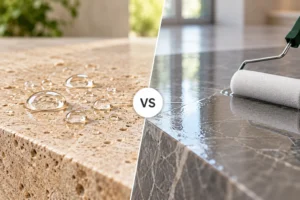
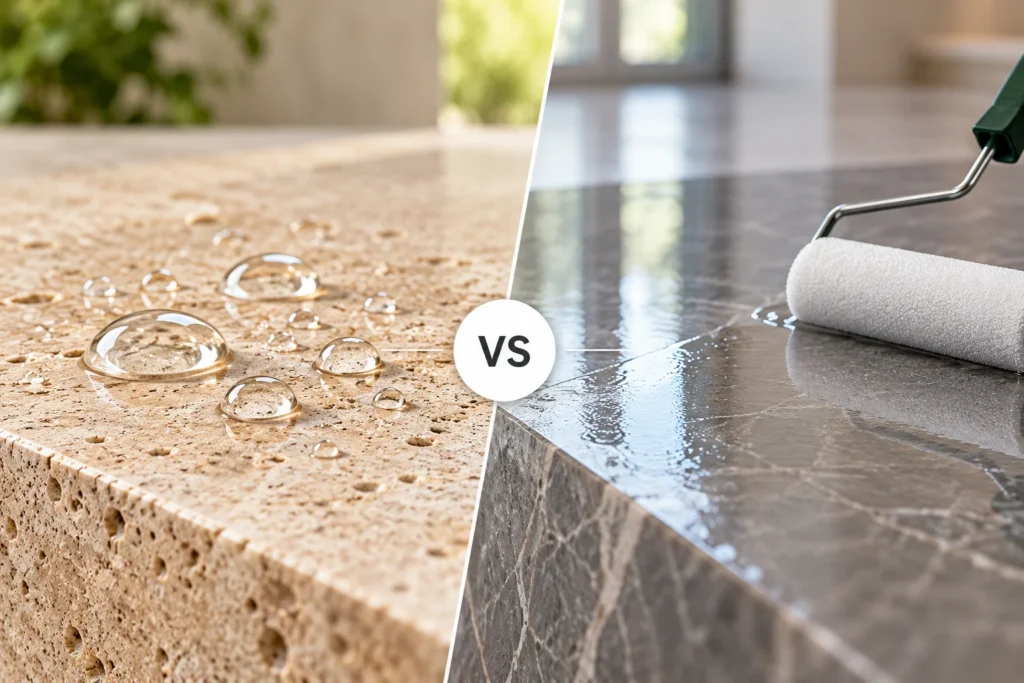
Two common options are impregnating sealers and topical sealers. Although both are designed to protect surfaces, they work in different ways. An impregnating sealer penetrates the stone’s pores, while a topical sealer creates a protective layer over the surface.
Understanding these differences helps contractors, stone restoration professionals and property owners select a treatment that suits the material, installation conditions and desired finish.
What Is an Impregnating Stone Sealer?
An impregnating sealer, also known as a penetrating stone sealer, is formulated to enter the pores of natural stone and reduce the absorption of liquids. Rather than creating a continuous coating over the surface, it works within the material’s pore structure.
Many impregnating sealers are designed to repel water, while specialist stain-resistant formulations can also help protect against oil, grease and other common contaminants. The level of protection depends on the product formulation, the stone’s porosity and correct application.
One of the main advantages of an impregnating treatment is that it generally preserves the original texture of the stone. Natural-look formulations typically produce little or no visible change, making them suitable where the appearance of marble, limestone, travertine or other natural materials needs to remain consistent.
Impregnating sealers also commonly allow water vapour to pass through the treated stone. This can be particularly important for external paving and installations where moisture movement needs to be considered.
For example, HIDRO PROTECTOR MM impregnating sealer is a water-based treatment designed to reduce moisture absorption without forming a surface film. It can be used on suitable natural stone, including marble, limestone and travertine.
What Is a Topical Stone Sealer?
A topical sealer works differently. Instead of relying primarily on penetration into the stone, it creates a protective film or coating on the surface.
These treatments may contain polymers, acrylic resins, waxes or other film-forming materials, depending on the intended application. They can help reduce direct contact between contaminants and the stone while providing a particular decorative finish.
Some topical treatments produce a polished or satin appearance, while others offer a more subdued matt finish. This makes them useful where a surface needs both protection and a controlled visual finish.
However, the coating becomes part of the exposed wearing surface. Foot traffic, cleaning methods, abrasion and environmental conditions can gradually affect its appearance. Topical treatments may therefore require periodic maintenance, recoating or controlled removal before a new treatment can be applied.
For suitable indoor floors, products such as HIDROFAB MATT protective wax finish provide a film-forming treatment designed to create a uniform matt finish and simplify ongoing cleaning.
Impregnating vs Topical Sealer: Key Differences
Although both types provide protection, their performance characteristics and maintenance requirements are not identical.
| Feature | Impregnating Sealer | Topical Sealer |
|---|---|---|
| How It Works | Penetrates the stone’s pores. | Forms a protective coating on the surface. |
| Appearance | Usually natural, unless colour-enhancing. | May create matt, satin or glossy finishes. |
| Vapour Permeability | Generally remains vapour-permeable. | Can restrict moisture movement. |
| Stain Resistance | Depends on water and oil repellency. | Depends on coating formulation and condition. |
| Surface Texture | Usually remains unchanged. | May alter texture or surface feel. |
| Wear Pattern | Less exposed to direct surface abrasion. | Coating can scratch or wear. |
| Maintenance | Cleaning and periodic reassessment. | May require recoating or stripping. |
| Outdoor Suitability | Many products are designed for outdoor use. | Requires careful confirmation of suitability. |
Neither type is automatically the best option for every situation. The correct choice depends on the surface’s condition, the exposure it receives and the finish the customer expects.
Which Sealer Is Better for Different Natural Stone Surfaces?
Marble and Limestone
Marble and limestone are commonly used for interior flooring, bathrooms, worktops and architectural finishes. Their absorbency varies according to the material, density and surface finish.
For polished marble or limestone where preserving the original appearance is important, a suitable impregnating treatment is often preferred. It can provide protection without adding a coating that changes the feel or clarity of the finished surface.
An appropriate stain-protection treatment is particularly relevant for kitchen worktops and other areas exposed to oil, food and drinks. However, sealing does not prevent acidic substances from etching calcite-based stone. Etch marks require a different restoration approach.
Where an indoor floor needs a specific polished, satin or matt finish, a compatible wax or coating system may be considered. The contractor should assess the existing finish, anticipated traffic and future maintenance requirements before applying it.
Travertine
Travertine can have considerable variation in porosity, depending on whether it is filled, unfilled, honed, polished or tumbled.
An impregnating sealer is often an appropriate choice because it can reduce liquid absorption while maintaining the material’s natural appearance. This is particularly useful where the stone has exposed pores or a textured finish.
For commercial or residential interiors requiring an additional decorative finish, a suitable topical treatment may be used. However, it should not be applied without checking compatibility with existing fillers, previous sealers and the maintenance regime.
Sandstone and Outdoor Paving
Sandstone patios and external paving are exposed to rainfall, changing temperatures, organic contamination and moisture movement through the installation.
For these surfaces, a suitable breathable impregnating sealer is generally the more practical starting point. It can reduce water absorption while allowing water vapour to pass through the treated material.
Topical coatings require more careful consideration outdoors. Depending on their formulation and the condition of the installation, they may affect slip resistance, weathering and moisture movement. A product should only be used externally when the manufacturer specifically approves the intended application.
Granite and Dense Stone
Dense granite and highly polished surfaces may absorb relatively little sealer. Applying excessive product can leave unwanted residue, streaks or uneven patches.
Where additional protection is required, a treatment designed for low-absorbency stone is preferable to a general-purpose product intended for porous paving.
For example, HIDRO SST natural stone protector is designed for water-repellent protection and is recommended by AK Surface Solutions for denser or polished stone surfaces.
Does a Wet-Look Sealer Always Create a Topical Coating?
No. This is an important distinction when selecting professional stone protection products.
A wet-look finish does not automatically mean a product is topical. Certain impregnating treatments are designed to enhance the natural colour of stone without leaving a continuous film on the surface.
For example, WET LOOK ECO colour-enhancing treatment is a water-based impregnating product that enhances the appearance of suitable absorbent stone while maintaining a matt finish without forming a surface film.
By comparison, a wax or resin-based finishing product may create a visible surface layer.
When choosing a colour-enhancing treatment, contractors should therefore distinguish between three separate requirements: protection against moisture, resistance to staining and the desired final appearance. A colour enhancer, water repellent and film-forming coating are not necessarily interchangeable.
Can Impregnating and Topical Sealers Be Used Together?
In some cases, a professional stone protection system may involve more than one treatment. However, combining products requires careful attention to compatibility, preparation and application sequence.
AK Surface Solutions recommends a two-stage sealing approach for suitable natural stone surfaces. The first stage uses an appropriate impregnating water repellent to reduce moisture absorption. A second compatible treatment can then provide additional stain resistance or the required decorative finish.
This does not mean every stone surface needs two applications or that any topical coating can be applied over any impregnator.
For example, an existing water-repellent treatment could affect how a subsequent product spreads, bonds or penetrates. The manufacturer must approve the proposed combination, and the first treatment must meet the required drying or curing conditions.
The professional stone protection guide explains how to select suitable first-stage treatments and additional finishes according to surface absorbency and the intended result.
How Does Sealer Choice Affect Maintenance?
Maintenance is often overlooked when comparing impregnating and topical sealers, yet it can have a significant effect on the long-term cost of caring for a stone floor.
An impregnating sealer does not create a sacrificial surface layer, so routine maintenance generally focuses on removing abrasive dirt, using compatible cleaning products and checking whether the treatment continues to provide sufficient protection.
Because the treatment works within the stone, gradual loss of water or stain repellency may be less visually obvious than wear to a surface coating. Periodic inspections and manufacturer-approved performance checks can help identify when further treatment is required.
A topical finish behaves differently. The coating itself may gradually lose clarity, develop wear patterns or show scratches in frequently used areas. Depending on the system, maintenance may involve polishing, recoating or removing the previous finish before applying a replacement.
In commercial buildings, the availability of maintenance equipment, expected foot traffic and cleaning frequency should therefore influence the original product selection.
For wider advice on preparing and maintaining natural stone, see the professional stone cleaning guide.
Common Mistakes When Choosing Stone Sealers
Selecting a Sealer Based Only on Appearance
A glossy finish may look attractive in a sample, but it may not be suitable for an external patio or a heavily trafficked floor. Protection requirements, surface conditions and maintenance should be considered alongside appearance.
Applying Too Much Product
More sealer does not necessarily provide better protection. Excess impregnating product can remain on dense surfaces and cause streaking, while excessive topical material can create uneven coating thickness or application defects.
Sealing a Damp or Contaminated Surface
Residual moisture, cleaning chemicals, oil, grout residue and existing coatings may interfere with the treatment. The surface should be properly prepared and meet the manufacturer’s moisture and cleanliness requirements before sealing.
Ignoring an Existing Surface Treatment
A previously sealed floor may not accept a new treatment as expected. Contractors should identify existing coatings and, where necessary, carry out suitable removal and preparation before applying another product.
Expecting Sealers to Prevent All Damage
Stone sealers can reduce liquid absorption and help make maintenance easier, but they do not make natural stone completely stain-proof, scratch-proof or resistant to acid etching. The protection must be matched to realistic performance expectations.
How to Choose the Right Stone Sealer
Before selecting a product, consider the material, installation conditions, exposure and expected maintenance.
Start by identifying whether the stone is highly absorbent, moderately absorbent or dense. Next, establish whether the installation is indoors or outdoors, whether moisture movement is a concern and whether the customer wants to retain the original appearance or achieve an enhanced finish.
The expected type of contamination is equally important. A water-repellent product may not offer the same level of oil resistance as a dedicated stain-proof impregnator, while a decorative coating may have different requirements for cleaning and upkeep.
Finally, test the selected product on a small, inconspicuous section of the actual surface. Confirm compatibility, absorption, appearance, residue removal and drying behaviour before treating the complete area.
Professionals can explore the stone sealing and protection products available from AK Surface Solutions or request guidance on selecting the correct treatment.
Frequently Asked Questions
Is an impregnating sealer better than a topical sealer?
For many natural stone applications, particularly where a natural appearance and vapour permeability are important, an impregnating sealer is often the preferred option. Topical treatments can be suitable where a specific surface finish or maintainable protective coating is required.
Do impregnating sealers change the colour of natural stone?
Natural-look impregnating sealers are generally designed to minimise visible changes. However, colour-enhancing impregnators are available when a deeper or wet-look appearance is desired. Always test the final appearance before full application.
Can topical sealers be used on outdoor stone?
Some specialist coatings are designed for outdoor use, but not all topical products are suitable. Outdoor applications require confirmation of weather resistance, moisture behaviour, slip resistance and manufacturer approval.
How long does an impregnating stone sealer last?
There is no universal lifespan. Durability depends on the product, stone porosity, application quality, cleaning chemicals, exposure and foot traffic. Follow the manufacturer’s recommendations and reassess protection periodically rather than relying on a fixed interval.
Do natural stone sealers make surfaces completely waterproof?
No. Most impregnating sealers are water repellents rather than waterproof membranes. They reduce liquid absorption but do not eliminate all moisture movement or replace proper waterproofing, drainage and installation design.
Find the Right Stone Protection System with AK Surface Solutions
The choice between an impregnating sealer and a topical sealer should be based on how the stone needs to perform, not simply the finish a product promises.
Impregnating treatments are often the better starting point for natural-looking protection and moisture management, while suitable topical systems can provide additional decorative finishes for selected applications. In some cases, a compatible multi-stage treatment may be appropriate.
AK Surface Solutions supplies professional stone sealers, impregnating protectors, colour enhancers and specialist finishing products for contractors, installers and restoration professionals across the UK.
Explore our professional natural stone protection products or contact the AK Surface Solutions team for advice on choosing a suitable treatment for your project.