Surface restoration is one of those trades where experience changes the way you look at a floor. A product may have the right technical description and a machine may be designed for the job, but the surface in front of you still has the final say. Its material, age, finish, previous treatments and condition can all change the process.
That is a lesson Artur Kowalczyk has built over more than 15 years working with natural stone, concrete, terrazzo, tile and specialist hard surfaces. His experience is not limited to selecting products from a catalogue. It comes from carrying out restoration work on site, solving problems when a floor behaves differently from expected, and seeing what actually happens when products, abrasives and machines meet real surfaces.
Artur recently shared part of that journey in Stone Specialist’s Surface Perspectives series. Rather than repeat that interview here, this article looks at the practical lessons behind it and how those lessons now shape the way AK Surface Solutions approaches products, technical advice and professional training.
Real Floors Teach Things Product Data Sheets Cannot
Technical data matters, but it cannot reproduce every condition found on site. Two floors made from the same type of stone can behave differently because one has been heavily maintained, another has old sealer in the surface, and another has been worn unevenly for years. The same is true with concrete, where finishing, curing, density and previous preparation can change the way diamond tooling performs.
One of Artur’s early marble grinding projects became an important turning point because the work took far longer than expected and demanded much more from the process than the original estimate suggested. The lesson was not simply about working harder. It was about understanding that restoration plans need to respond to the surface as it reveals itself, rather than forcing a pre-set sequence because that sequence worked somewhere else.
That kind of experience changes how a contractor evaluates risk. Test areas become more important, assumptions become less useful, and the question shifts from “Which product is normally used?” to “What is this particular surface telling me?”
The Surface Should Decide the Process
There is rarely one universal method for restoring stone. Marble, limestone, travertine, granite, terrazzo and engineered materials differ in hardness, mineral composition, porosity and chemical sensitivity. Even within one material group, the existing finish and depth of damage can completely change the restoration sequence.
A dull polished marble floor may need refinement and polishing, while a deeply scratched floor may need several abrasive stages before any polishing product should be considered. A honed limestone floor has a different target finish again. This is why AK’s Stone Honing & Polishing Guide starts with identifying the material, existing finish, damage and required result before selecting an abrasive or polishing treatment.
The same thinking applies to cleaning, sealing and stain removal. The surface should determine the chemistry and process, not the other way around. A good restoration specification is therefore built from diagnosis first and product selection second.
Product Advice Is Better When It Comes from Application Experience
A product can look ideal on paper and still be wrong for the job if one important detail has been missed. That might be the density of the stone, the type of contamination, whether a previous coating is present, the machine being used or the finish the customer expects at the end.
This is one reason AK Surface Solutions places so much emphasis on practical technical support. The business was built around more than 15 years of hands-on surface-care experience, and that background influences how machines, diamond tooling and specialist products are selected. The aim is not simply to sell a product, but to understand where it sits within the complete process.
For customers, that often means being asked a few questions before a recommendation is made. Photographs, surface type, current condition, previous treatments, machine details and the required result can all change the answer. The About AK Surface Solutions page explains more about how that practical experience underpins the company’s product and technical guidance.
Misidentifying the Material Can Change Everything
One of the most avoidable restoration problems begins before any machine is switched on: the surface has been identified incorrectly. Names used in the market can sometimes make an acrylic, resin-based or composite product sound like natural stone, while the material itself may react very differently to abrasives, chemicals and heat.
Artur highlighted this issue in his Stone Specialist interview after encountering commercial work where occupants believed they had selected a stone surface, but the worktops were actually a much softer acrylic-based material with stone content. That difference is not cosmetic. It changes how aggressively the surface can be treated and which restoration methods are appropriate.
The lesson is broader than any one product. Never choose a restoration method from the marketing name alone. Confirm what the surface actually is, carry out a controlled test and only then decide how far the material can safely be refined, polished, cleaned or protected.
Sometimes the Best Restoration Is the Most Controlled One
Experience also teaches restraint. Restoration is not always about removing as much material as possible or chasing the highest possible shine. On older floors, historic surfaces and materials with limited wear depth, an aggressive process can remove character or create damage that cannot be reversed.
That principle was particularly important on the restoration work carried out at Ipswich Museum, where an original Victorian quarry-tile floor dating from 1881 formed part of a Grade II listed building. The floor included uneven and differently profiled tiles, so the work had to improve practicality and appearance without treating the historic material like a new installation.
Projects like that reinforce a simple idea: the best technical result is the one that respects the material and the purpose of the floor. Sometimes that means stopping earlier, refining more carefully or accepting small signs of age rather than removing unnecessary surface depth.
Restoration Can Extend the Life of Existing Materials
Natural stone has an important advantage over many disposable finishes: it can often be restored several times during its service life. Scratches, dullness, wear, staining and loss of clarity do not automatically mean the surface needs to be removed and replaced. With the right assessment, many floors can be cleaned, honed, polished and protected again.
That makes restoration valuable for more than appearance. Keeping an existing material in service avoids unnecessary removal, reduces replacement demand and preserves the character already present in the building. On older stone especially, replacing a floor can also mean losing material that is difficult to match in colour, pattern, texture or age.
Protection and maintenance matter after restoration as well. The Stone Protection Guide explains how the correct treatment depends on the material, absorbency, location and desired finish. Extending the life of a restored surface is not about applying the strongest sealer available; it is about matching the protection system to the stone and the way the surface will be used.
Experience Changes the Questions You Ask
Early in a trade, it is natural to focus on products and procedures. With experience, the questions become broader. What caused the damage? Is it contamination or actual surface loss? What has been applied previously? Is the customer asking for a finish the material can realistically achieve? What is the least aggressive process that can produce the required result?
Those questions are often more important than the brand name on a bottle or the grit number on a pad. They help prevent over-processing, reduce wasted materials and make it easier to explain the proposed work to a customer before the job begins.
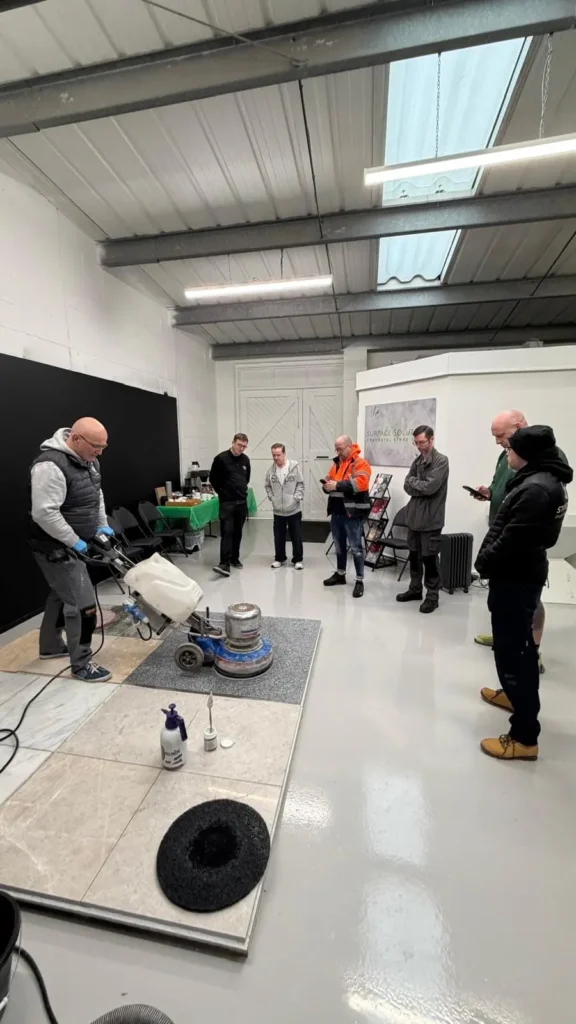
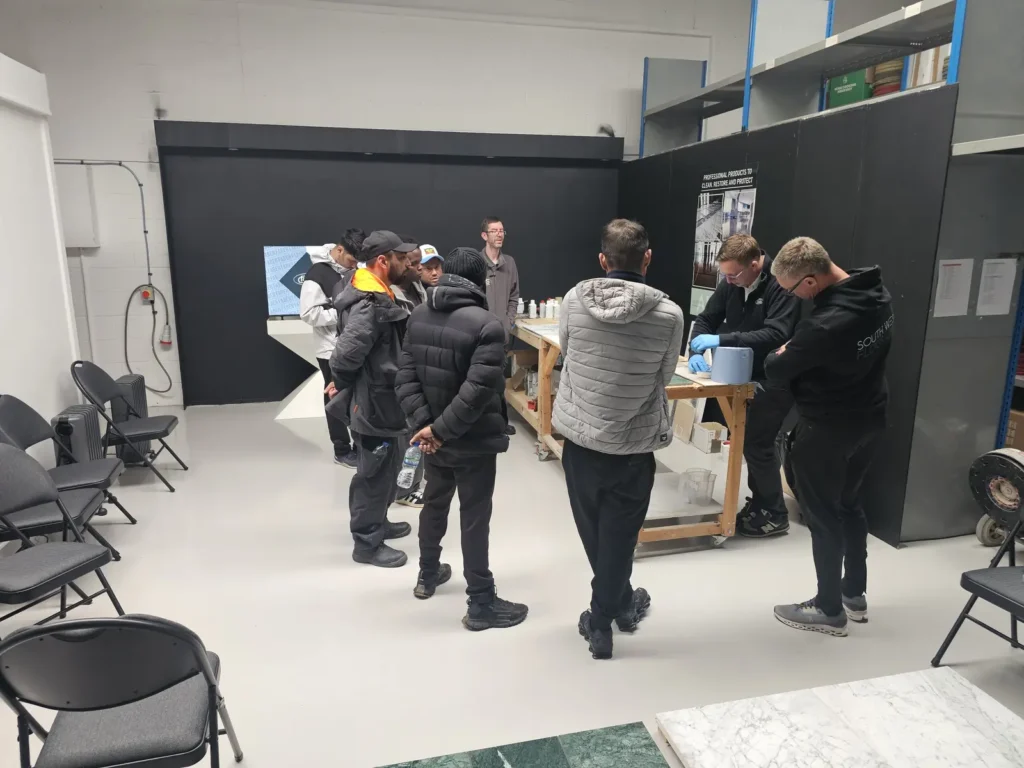
This way of thinking is also central to AK’s professional training. The Tile & Stone Restoration Training programme combines theory with practical work because understanding why a process is used is more valuable than simply memorising a fixed sequence.
Knowledge Should Keep Moving Through the Trade
Hands-on experience does not mean working in isolation. Artur’s approach has also been shaped by professional training, manufacturer support and conversations with other experienced contractors. Those exchanges matter because surfaces continue to change, new products enter the market and difficult jobs often produce lessons that are useful far beyond one project.
The strongest technical support comes from combining manufacturer knowledge with real application experience. Product instructions explain how a treatment is designed to work; site experience shows the variables that can influence the result. When both are used together, recommendations become more useful and more realistic.
That is the direction AK Surface Solutions continues to build around: supplying professional products and machines, but also helping contractors understand where those products fit within the wider restoration system.
From Working on Surfaces to Supporting the People Who Restore Them
AK Surface Solutions grew from practical restoration work rather than from a purely retail background. That distinction matters because the questions customers ask are often the same questions that appear on site: which cleaner is safe for this material, where should the honing sequence start, why is a diamond tool glazing, which sealer will preserve a natural finish, or whether a surface should be treated at all.
No article, product page or technical sheet can replace seeing the actual floor, but good guidance can help contractors make better first decisions. That is why AK continues to combine product supply with technical advice, training and detailed surface-care guides rather than treating each product as an isolated purchase.
If you are working with a difficult surface and are unsure about the correct product, tooling or restoration approach, contact the AK Surface Solutions team with details and photographs of the project. The more accurately the surface is understood at the beginning, the easier it is to build a process around the result you actually need.
Frequently Asked Questions
Can natural stone be restored instead of replaced?
In many cases, yes. Natural stone can often be cleaned, honed, polished, repaired and protected rather than removed. Whether restoration is suitable depends on the stone, depth of damage, remaining material, previous treatments and the result required. A test area is normally the safest way to confirm the proposed process.
How do you choose the right stone restoration method?
Start by identifying the material and existing finish, then assess the type and depth of damage. Previous coatings, sealers, staining and maintenance products should also be considered. The restoration method should then be tested on a small area before the complete floor is treated.
Why is surface identification important before restoration?
Different materials react differently to chemicals, abrasives, polishing products and heat. Natural marble, granite, porcelain, quartz composites and acrylic-based surfaces may look similar in some installations but require very different treatment. Incorrect identification can lead to etching, scratching, excessive material removal or an unsuitable finish.