Choosing the correct diamond bond can make the difference between a floor grinder that cuts consistently and one that seems to skate over the surface. The confusing part is that the bond choice works in the opposite way many people expect. Hard concrete generally needs a softer bond, while soft or abrasive concrete usually needs a harder bond.
That rule sounds simple, but the reason behind it matters. If you understand how the bond is supposed to wear and expose fresh diamonds, it becomes much easier to recognise glazing, excessive tool wear and poor cutting performance before they cost you hours on site.
Why the Bond Matters in Concrete Grinding
A metal-bond diamond tool is made from two working components: the diamond particles that cut the concrete and the metal matrix that holds those particles in place. During grinding, the exposed diamonds gradually become worn or rounded, while the surrounding bond also wears away. That controlled bond wear is what releases tired diamonds and exposes fresh cutting points.
For the tool to work properly, the bond and the concrete need to wear against each other at the right rate. If the bond releases diamonds too slowly, the segment can become smooth and stop cutting efficiently. If it releases them too quickly, the tool may continue cutting but the segment life can become unnecessarily short.
This is why bond selection should never be treated as a colour choice or a brand preference. The correct bond is the one that matches how abrasive the slab is under the machine you are using. AK Surface Solutions explains the wider relationship between hardness, grit, segment type and tooling progression in its How to Choose Lavina Diamond Tools for Concrete Grinding & Polishing guide.
Why Hard Concrete Needs a Softer Bond
Hard, dense concrete is relatively gentle on the metal matrix because the surface does not abrade the bond very quickly. That sounds like a good thing, but it can create a problem. If the matrix is also hard, the worn diamonds can remain locked in place instead of being released, and the face of the segment can begin to glaze.
A softer bond solves that problem by wearing at a more controlled rate against the dense slab. As the matrix wears, new diamond particles are exposed and the tool can continue cutting instead of becoming polished smooth. This is why the standard rule is hard concrete equals softer bond.
On very hard floors, the difference can be obvious within a short test area. A tool that is too hard may produce very little material removal and can feel as though it is sliding over the concrete. A correctly matched softer bond should stay open and maintain a more consistent scratch pattern.
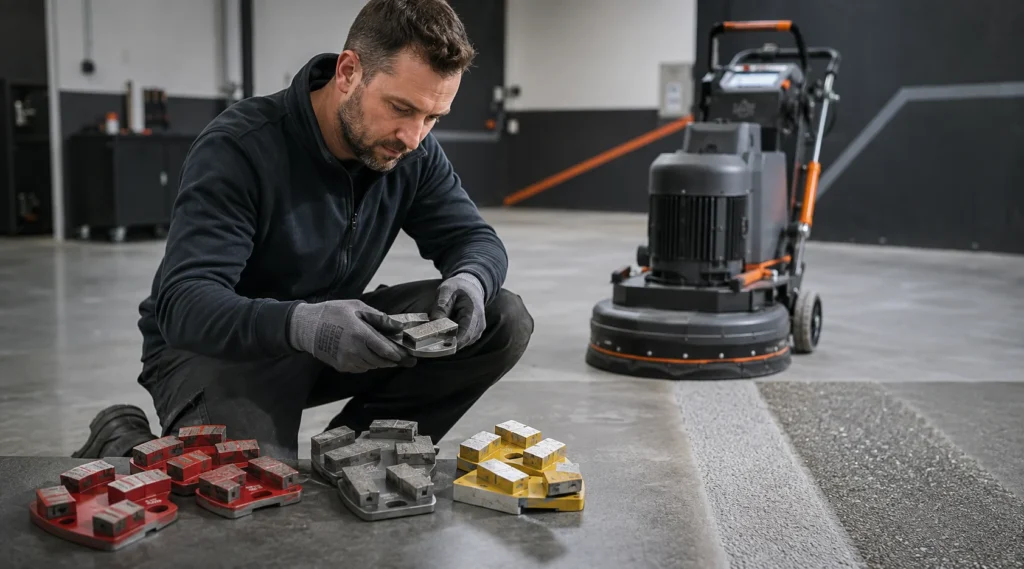
For AK’s LAVINA system, the Red Metal Bond Diamonds for Hard Concrete are the soft-bond option intended for hard, dense slabs where a harder bond may glaze or cut too slowly.
Why Soft Concrete Needs a Harder Bond
Soft concrete creates the opposite problem because it is usually more abrasive. The slab itself wears the metal matrix quickly, so a soft bond can disappear much faster than expected. The tool may still cut aggressively, but the working life of the segment can be poor and the cost per square metre can increase quickly.
A harder bond slows that wear. It holds the diamonds in the segment for longer and prevents the concrete from stripping away the matrix before the diamond particles have delivered useful cutting life. This is why soft or abrasive concrete is normally matched with a harder metal bond.
Very soft floors can also create large amounts of coarse, sandy dust, particularly when they contain a weak surface or friable material. If you notice that the tool is losing segment height rapidly even though it is cutting well, the bond may be too soft for the slab. Moving to a harder bond can give you a more controlled balance between removal rate and tool life.
AK’s Yellow Metal Bond Diamonds for Soft Concrete use the harder bond intended for softer or more abrasive slabs.
Where Medium Bond Diamond Tools Fit
Many floors sit between the two extremes. They are not so hard that standard tooling immediately glazes, and they are not so abrasive that the segments disappear unusually quickly. In those conditions, a medium bond can provide a practical balance between cutting performance and controlled wear.
AK Surface Solutions positions its Grey Metal Bond Diamonds for Medium Concrete for medium-hard concrete around Mohs 3 to 5. That makes the grey bond a sensible starting point where the hardness test and a small grinding test both suggest a middle-range slab.
A medium bond is still not a universal safe choice. If the floor contains harder and softer pours, a tool that performs well in one section may begin glazing or wearing too quickly in another. The bond should always be confirmed by what happens during the test grind rather than by assuming that most concrete is medium.
How to Tell When the Bond Is Too Hard
The most common sign of a bond that is too hard for the floor is glazing. The face of the segment becomes smooth because worn diamonds are not being released quickly enough. Cutting speed falls, the grinder may feel less productive and additional passes do not necessarily improve the removal rate.
You may also notice that the segment still has plenty of material left but the exposed surface looks polished rather than sharp. Heat can increase because the tool is rubbing rather than cutting efficiently. On a dense slab, this combination usually points towards a bond that needs to wear more readily.
When that happens, simply adding more machine time is rarely the best solution. The more useful response is to reassess the concrete hardness, move towards a softer bond and test again. A small tooling change can restore cutting performance much faster than trying to force a glazed segment to work.
How to Tell When the Bond Is Too Soft
A bond that is too soft tends to fail in the opposite way. The tool cuts, but the segment wears away too quickly because the concrete is abrading the metal matrix faster than necessary. You may see a noticeably rapid loss of segment height after a relatively small working area.
This is particularly common on soft, sandy or highly abrasive concrete. The floor may produce coarse dust and the tools can appear productive at first, but the replacement rate becomes expensive. In that situation, a harder bond can hold the diamonds more securely and improve tool life without sacrificing the cutting action you actually need.
The key is to look at both productivity and wear together. Fast cutting is not automatically good performance if the tooling is disappearing at an unsustainable rate. The correct bond should give you useful removal while wearing in a controlled, predictable way.
Concrete Hardness and Concrete Abrasiveness Are Related but Not Identical
Hardness testing is extremely useful, but it does not explain everything that happens during grinding. Two floors with a similar Mohs reading can still behave differently because aggregate, finishing, curing, laitance and surface condition affect how abrasive the slab is against the bond.
A dense power-trowelled floor may act very hard at the surface and cause glazing. Another slab with a similar underlying strength may contain a weak, abrasive top layer that wears tools much faster. That is why the hardness test should be followed by an actual test grind.
The scratch test helps narrow down the likely bond family. The grinding test confirms whether the tool stays open, maintains its scratch pattern and wears at a reasonable rate under the real machine. When the two observations agree, you have a much stronger basis for selecting the tooling for the full floor.
Bond and Grit Are Two Different Decisions
Choosing the correct bond does not tell you which grit to start with. Bond controls how the segment wears against the concrete, while grit controls how aggressively the exposed diamonds cut and how deep the scratch pattern will be. You need to make both decisions separately.
A hard floor may require a soft bond, but the starting grit still depends on what you are trying to achieve. Coating removal, full aggregate exposure, light surface opening and a salt-and-pepper finish can all require different starting grits even when the concrete hardness is the same.
AK’s broader LAVINA Diamond Tools range includes different metal-bond grits and later-stage transition and polishing tools, so the bond should be treated as the first part of a complete grinding sequence rather than as a stand-alone choice.
Single-Segment and Double-Segment Tools Also Change Performance
Segment configuration affects how much pressure is concentrated at each contact point. A single-segment tool places more of the machine load onto a smaller contact area, which can make it feel more aggressive and help a lighter grinder cut more effectively. A double-segment tool spreads the load across a larger area and can provide a more stable, controlled grinding action.
This means two tools with the same bond and grit can still behave differently under different machines. A heavier grinder may not need the same segment configuration as a lighter unit, and a very aggressive setup can create deeper scratches than the project requires.
Bond selection therefore needs to sit alongside machine weight, segment count, working width and the required finish. If a tool feels wrong, do not assume the bond is the only variable. The complete setup should be considered before changing direction.
What If the Concrete Changes Across the Floor?
Large commercial floors are often less uniform than they appear. Different pours, patch repairs, perimeter finishing and areas exposed to different wear can create noticeable changes in hardness and abrasiveness across the same project. One bond may therefore work well in the main field but struggle near an extension joint or repaired section.
The safest approach is to test representative areas before committing to the entire floor. If the slab changes significantly, it can be more efficient to keep more than one bond available and treat each zone according to its behaviour. Trying to force one tool across every condition may result in glazing in one section and excessive wear in another.
This is also why experienced contractors watch the tooling throughout the job rather than only during the first few metres. Changes in cutting rate, dust and segment wear can tell you that the concrete underneath the machine is no longer behaving like the section you tested at the start.
How AK Surface Solutions Matches Red, Grey and Yellow Bonds
AK Surface Solutions uses a straightforward bond system for its principal LAVINA metal-bond tools. Red is the softer bond for hard concrete, Grey is the medium bond for medium concrete, and Yellow is the harder bond for soft or abrasive concrete. The system follows the same fundamental rule used throughout professional concrete grinding: harder slabs need the bond to wear more readily, while softer slabs need the bond to resist wear.
This colour system makes ordering easier, but the colour itself should not replace testing. Concrete hardness, floor condition, machine weight, starting grit and aggregate exposure still need to be considered together. If the tool starts glazing or wearing too quickly, the behaviour of the segment is more important than the label on the box.
For contractors comparing options, the complete LAVINA Diamond Tools category brings together metal bonds, transition tooling and polishing pads for the different stages of the process.
Common Bond Selection Mistakes
One of the most common mistakes is assuming that hard concrete should be matched with a hard bond because the names sound as though they should correspond. In practice, that combination can cause glazing because neither the slab nor the bond wears enough to release fresh diamonds. Remembering that the relationship is opposite is one of the easiest ways to avoid this problem.
Another mistake is judging the bond only by how quickly the floor looks opened. An extremely soft bond can cut aggressively on abrasive concrete, but the segment may disappear far too fast. Tool life, scratch consistency and material-removal rate should be assessed together.
It is also risky to choose a bond without testing the slab or to keep using the same tooling simply because it worked on the previous project. Concrete varies significantly from floor to floor, and the most economical setup is usually the one that is selected from the actual behaviour of the current slab.
Frequently Asked Questions
What diamond bond should I use for hard concrete?
Hard concrete generally needs a softer metal bond. Dense concrete does not wear the matrix very quickly, so a softer bond helps release worn diamonds and expose fresh cutting points. If the bond is too hard, the segment can glaze and the grinding rate can drop.
What diamond bond should I use for soft concrete?
Soft or abrasive concrete normally needs a harder bond. The harder matrix resists the abrasive floor and helps prevent the diamond segment from wearing away too quickly. A soft bond on soft concrete may cut well initially but can have a much shorter working life.
Why do diamond tools glaze on hard concrete?
Glazing happens when the metal matrix does not wear quickly enough to release worn diamond particles. The face of the segment becomes smooth and the tool starts rubbing rather than cutting efficiently. On hard concrete, moving to a softer bond is often the correct response.
What is the difference between soft bond and hard bond diamond tools?
The difference is how quickly the metal matrix wears and releases diamond particles. A soft bond wears faster and is generally used on hard concrete, while a hard bond wears more slowly and is generally used on soft or abrasive concrete. The aim is to keep fresh diamonds exposed without sacrificing tool life.
How do I know if my diamond bond is wrong?
If the tool glazes, skates over the surface or stops cutting while plenty of segment remains, the bond may be too hard. If the segment wears away unusually quickly even though the tool is cutting, the bond may be too soft. A small grinding test is the best way to confirm the behaviour before processing the full floor.
Choose the Bond from the Floor, Not from Habit
Soft bond and hard bond diamond tools are not better or worse than one another. They are designed for different concrete conditions, and the correct choice is the one that allows the bond to wear at the right rate for the slab in front of you.
Test the concrete, run a small grinding area and watch how the segment behaves. If the tool stays open, cuts consistently and wears at a controlled rate, the bond is doing its job. If you need help matching the concrete, machine and required finish, contact AK Surface Solutions for tooling guidance before ordering.